Behind the build
How we build a 3D car cake
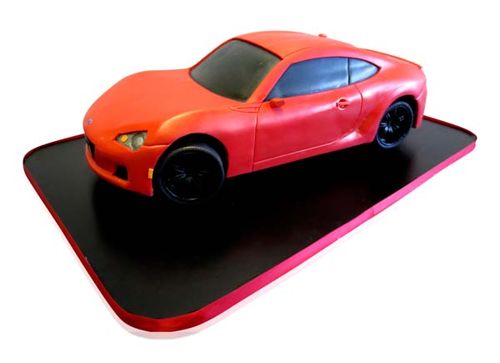
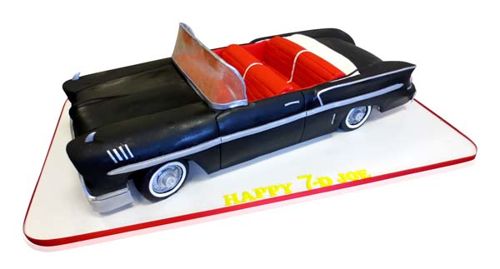
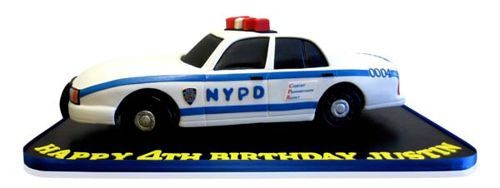
Sculpted vehicles are what people ask us for most on milestone birthdays. Here is what actually goes into one, from the reference photo to the last coat of paint.

Start with the real car
Almost every car cake starts with a photo. The year, the trim, the wheels, and the exact shade of the paint all matter, because the person receiving it knows that car far better than we do. A 2010 Camaro and a 1969 Camaro are different cakes. We ask for a few angles, front three-quarter if you have it, and build the proportions from those rather than from a generic car shape.
Carve it, then hold it up
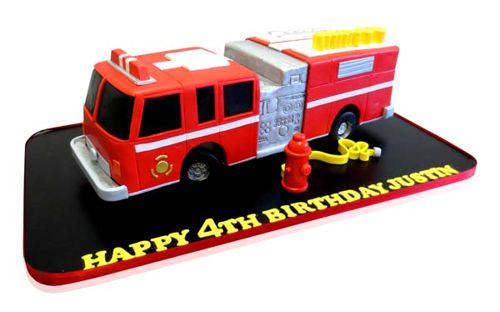
Under the fondant, a sculpted cake is mostly engineering. We bake a denser cake than we would for a tiered design, chill it hard, then carve the body in stages, checking the silhouette against the reference as we go. Anything with an overhang, a spoiler, a fire truck ladder, an open convertible top, gets internal support so it holds its shape in the box, in the van, and on the table for the whole party.
The paint job is the tell
Paint is what sells it. Fondant gets airbrushed in coats to build up depth, the way real automotive paint works, and the small parts are made separately from gum paste and left to firm: grille, badges, mirrors, headlights, door handles. Those details are what guests end up photographing. Everything on the cake is edible, wheels included.
About the author
Mona
Mona has been baking and decorating for as long as she can remember. She turned that into a business in the early 2000s and has run a full-time cake studio with a team of decorators since 2008, designing and hand-finishing cakes for thousands of New York celebrations. Her work is known for clean, precise fondant and fully sculpted 3D designs.
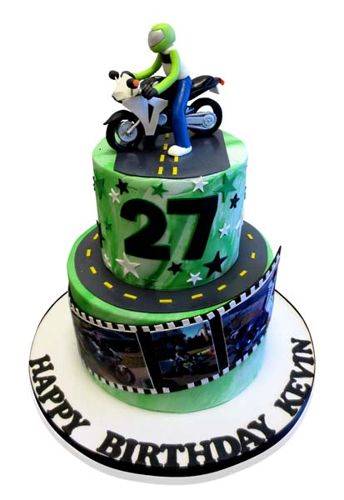
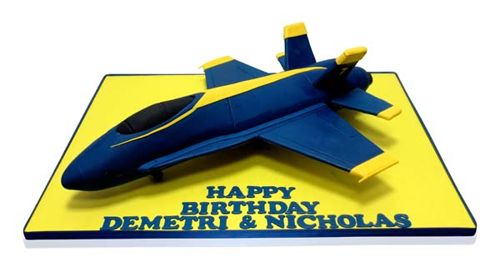
More about Mona and the studioSculpted vehicles are not limited to cars. We have done motorcycles, fire trucks, police cruisers, planes, and one very committed Thomas the Tank Engine. 3D cakes start at $500, and we deliver across NYC and the tri-state area.